
Argo Transit
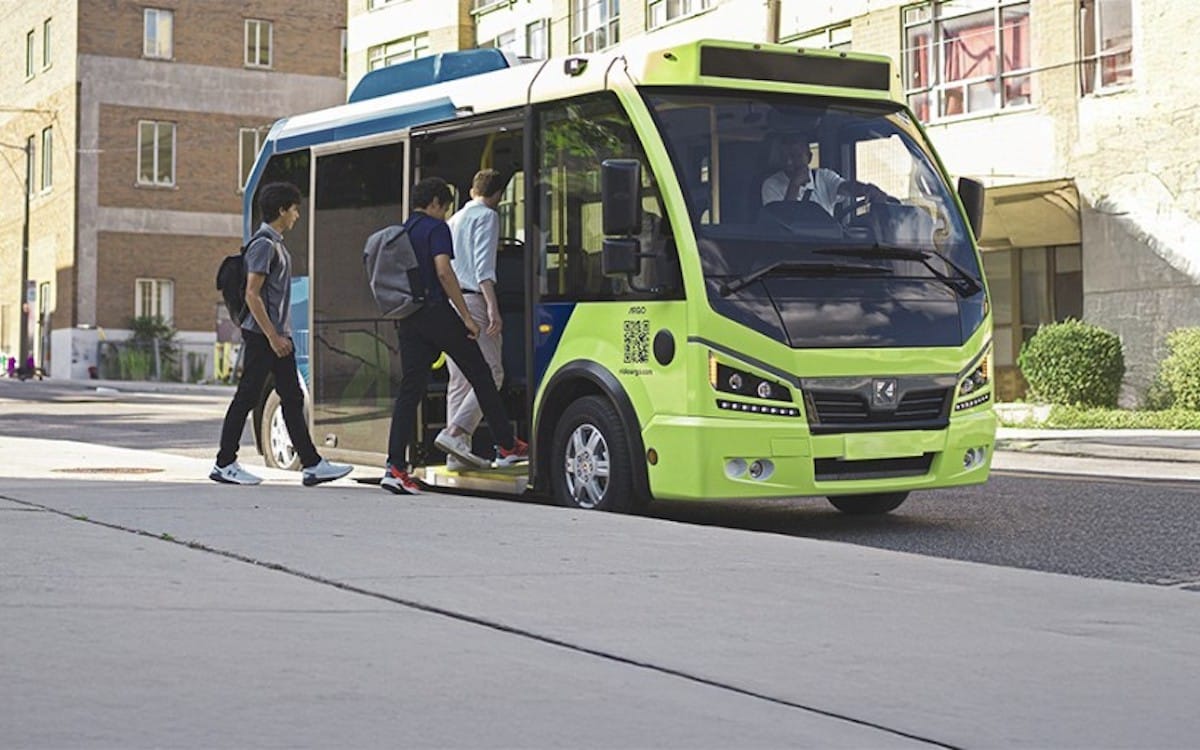
Argo Corporation, a Toronto-based on-demand public transit technology transit company, has built its business around a simple pitch to Canadian municipalities: public transit should be as convenient as driving, offered at a standard transit fare and fully electric.
Founded in 2024 by Praveen Arichandran and Qamar Qureshi, Argo delivers an integrated city transit system: electric vehicles, charging infrastructure, routing technology and operations run together as one network.
“There’s large, very robust public transit infrastructure in Ontario, but for a lot of people, that last-mile gap can pose a challenge,” says Arichandran, who is also the company’s CEO.
“We started Argo because we believed we could develop a technology solution that extended our existing transit systems into the last mile to people’s doorsteps.”
Smart routing system
Argo put its first electric vehicles on the road in 2025, when it launched an on-demand transit service in Bradford West Gwillimbury, Ont. The rollout used the company’s Argo X1 vehicles (supplied by Mississauga-based company Damera) running on Argo’s Smart Routing system, which routes vehicles in real time on rider demand and picks riders up near their door.
Smart Routing earned Argo a place on TIME’s Best Inventions of 2026 list, as well as Fast Company’s 2025 World Changing Ideas List.
The company says average daily transit ridership in Bradford West Gwillimbury has grown to more than three times that of the town’s previous fixed-route system, and the town’s cost per ride fell by more than 50 per cent. In September 2025, transfers to and from Bradford GO Station were 5.5 times higher than the 12-month baseline before Argo’s April 2025 launch.
Expansion across Ontario
Since that first deployment, Argo has expanded its electric fleet into two more Ontario communities. The company launched a pilot in downtown Brampton in late 2025, integrating with Brampton Transit and the PRESTO fare system through an agreement with Metrolinx, the provincial transit agency. In September, it launched a 15-month pilot with the Town of Caledon, serving several communities in the area.
Argo now has 35 Class 2b-3 electric buses, with the fleet driving around 1,770,000 kilometres annually. Planning, he says, is key for any fleet looking to electrify.
“There have been a lot of challenges for transit agencies that are trying to electrify,” says Arichandran. “A lot of them come down to operation coordination and efficient deployment of charging. How do you get the power in the right place? How do you coordinate when to charge and how much to charge?” If you do that really well, you can have incredible outcomes … but integration is not done intentionally, then you can also end up in situations where you need significantly more electric vehicles to deliver the same outcomes as diesel or ICE vehicles.”
Argo uses a mix of scheduled Level 2 charging and DC fast charging at two depots and satellite locations to keep the fleet running. Its 50kW DC fast chargers in Brampton handle more than 900 charging sessions per month.
Arichandran says each community has presented their own requirements for infrastructure deployment, scheduling and other necessities. The company does a detailed simulation and analysis to tailor its approach to fit the needs of each area.
Sponsors & Partners